pellet press
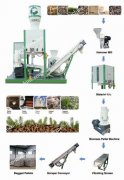
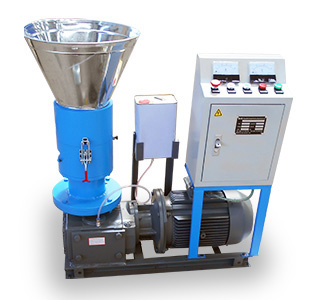
More and more people are interested in how to make pellets, the equipment used and the skills required to consistently produce quality pellets, mainly form pellet stoves and boilers. There are various pieces of equipment, however they all centre around the main piece of equipment the pellet press. A pellet press is also known by several other names such as a pellet mill or pellet machine. The pellet press has seen various design changes over is history, which has been over century. Originally designed for animal feed pellet production, a flat die pellet press design what the original. The principle of the flat die pellet press is a vertical process orientation. Material enters the top of the mill and falls on to the surface of the die template. Here, a series of rollers set a specific height from the die compress the material through the pellet mill die, and into pellet form. Many people believe a roller and die are in contact with each other. However setting an appropriate gap is part of the skill. If the gap is too small and the roller and die touch, excessive wear of the parts will take place, and also pellet quality will reduce with an increased fines percentage. Increasing the gap can increase pellet quality, however it also increased energy demands and therefore the cost of production. Therefore a balance has to be meet between the life of the consumables, pellet quality and the energy consumption of the press.
As stated, the original pellet press was designed to produce animal feed. Animal feed is a low density material, where biomass materials used to produce fuel pellets generally have a higher density. To compress higher density materials into pellet form requires more energy, and generally more heat. Therefore many animal feed pellet presses cannot be used to produce wood pellets for example as they lack sufficient power. a lower gearing of the press is required to produce fuel pellets of a sufficient quality. In the 1970's a new design of pellet press was gaining market share. The ring die design was claimed to be more energy efficient and easier to scale up for large scale production. This has lead to a general divide which still exists today; where flat die pellet presses are used for small scale production and the ring die pellet press for large scale pellet production.
Rotating-Die Type
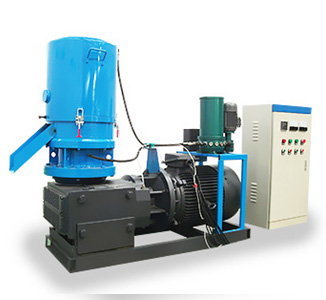
Rotating-Roller Type
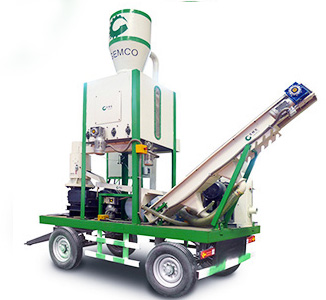
Small Pellet Plant
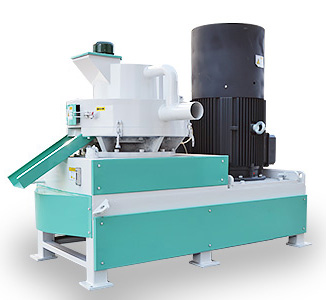
Verticle Ring Die Type
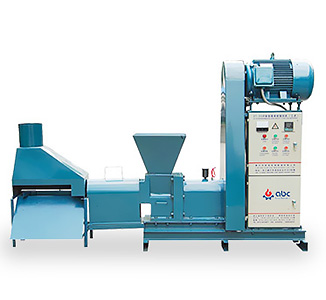
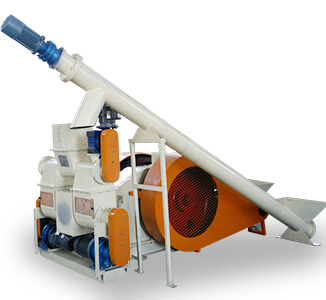
Screw Briquette Machine
Punching Briquette Press